Sugar- Not So Sweet
Sugar is an integral part of our diet. Our brain and muscles need it for energy. But consuming too much of the wrong kind of sugar can harm our health.
The World Health Organization (WHO) has found that excess intake of free sugars is directly linked to weight gain and obesity. This, in turn, increases the risk of heart disease, high blood pressure, stroke, Type 2 Diabetes, and even cancer. It also contributes to tooth decay—a growing problem in both children and adults.
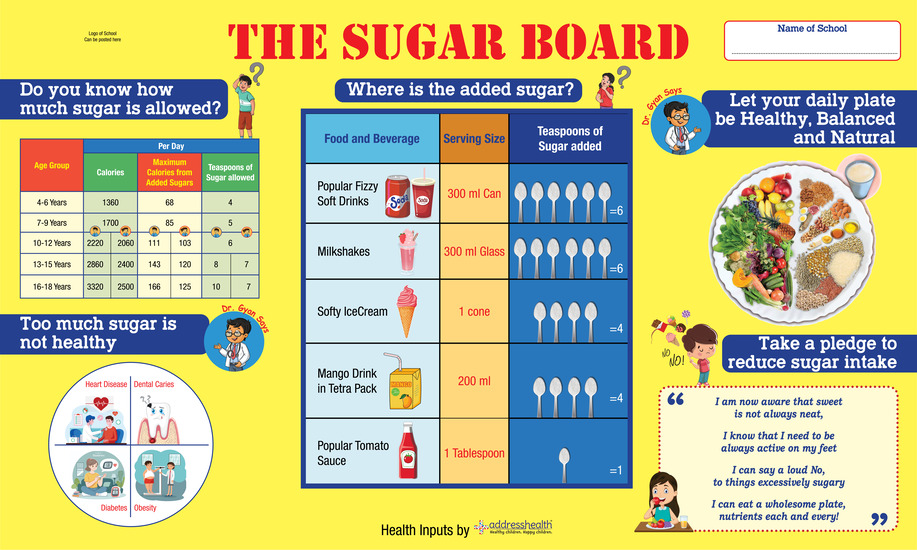
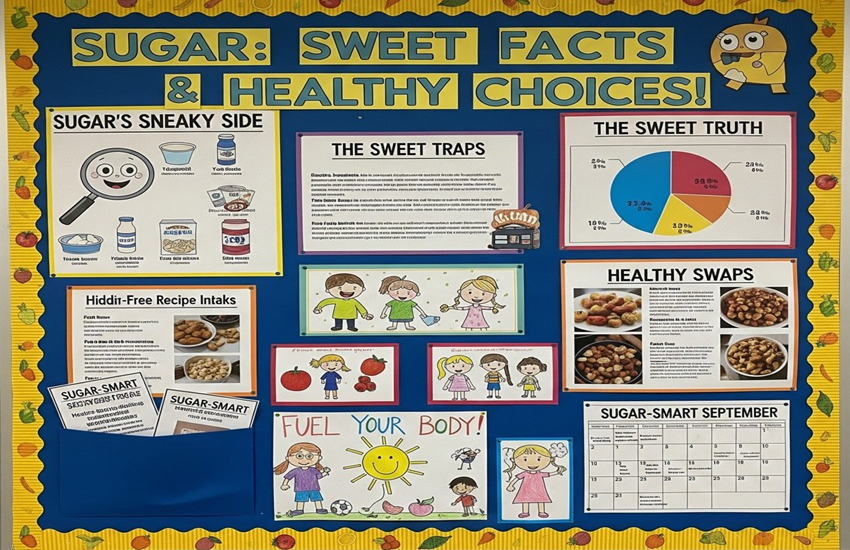
Recognizing this, the Central Board of Secondary Education (CBSE) launched the Sugar Board Initiative, urging schools, parents, and students to be more mindful of sugar consumption. The aim is to spread awareness about the dangers of excess sugar and encourage healthier food choices among children.
What Are Free Sugars?
Free sugars are those that are added to foods and drinks by manufacturers, cooks, or even by us at home. These include:
- Fizzy drinks, candies, cakes, ice creams, chocolates
- Honey, syrups (like maple syrup), unsweetened fruit juices, fruit concentrates
But not all sugars are bad. Sugar that is naturally present in milk, intact fruits, vegetables, and grains comes with proteins, fiber, vitamins, and minerals—making it healthy and essential.
The Hidden Sugars
The problem is not just the obvious sweets but also the hidden sugars in foods that don’t even taste very sweet:
- Ready-made ketchups and sauces
- Breakfast cereals
- Flavored curd and fruit drinks
- Energy drinks
- Packaged bread
These hidden sugars are a major reason why many children consume far more sugar than recommended.
Why Do We Crave Sugar?
Our ancestors needed sugar for survival—it provided quick energy and fat storage. But today, with easy access to processed foods, aggressive advertising, and the “reward value” our brain associates with sugar, cravings are stronger than ever. This makes it difficult to cut down, especially for children who are targeted by marketing campaigns.
The Way Out – Steps for Families and Schools
Beating the sugar culture requires effort at every level—from policies in the food industry to awareness in schools and homes. Here’s how parents and schools can help children:
- Reduce added sugar in daily foods.
- Cut down on processed and packaged foods.
- Replace juices and soft drinks with plain water.
- Avoid using sweets as rewards.
- Read food labels carefully and recognize the many names of sugar (maltose, dextrose, high fructose corn syrup, sucrose, molasses, agave nectar, etc.).
- Offer fruits as natural desserts.
- Teach children how advertising and packaging influence their food choices.
A Healthy Balance
Sugar was meant to be an occasional treat—something to enjoy once in a while, not a daily habit.
The WHO strongly recommends that free sugars should contribute to less than 10% of our total daily energy intake.
By supporting initiatives like the CBSE Sugar Board Campaign, and by making small but consistent changes at home and in schools, we can raise a healthier generation of children who understand that too much sugar is truly not so sweet.